Tag: #ageofunderstanding

  • Why Has It Taken So Long to Go Back to the Moon?


    Age of Understanding Series


    It’s a question that feels almost absurd when you first ask it.


    We went to the Moon in 1969.
    We walked on its surface.
    We returned multiple times.


    And then… we stopped.


    More than fifty years later, we’re only now preparing to go back.


    So what happened?


    Did we lose the technology?
    Did we lose the will?
    Or did something else change?

    We Didn’t Stop Because We Couldn’t


    The common assumption is that returning to the Moon should be easy.


    After all, we’ve already done it.


    But the truth is more complex—and more revealing.


    The Apollo Program was never just about exploration.


    It was about urgency.


    It was about proving something—during the Space Race—on a global stage.


    And when that goal was achieved, something quietly shifted.


    The urgency disappeared.

    When the Reason Fades, So Does the Momentum


    The Apollo missions were fueled by an extraordinary level of investment—financial, political, and cultural.
    But once the objective was met, the question became:


    Why continue?


    The answer, at the time, wasn’t compelling enough.


    Funding shifted. Priorities changed.


    Attention moved toward:


    Low Earth orbit
    The International Space     Station
    Robotic exploration


    The Moon, for a time, became something we had already done.

    We Didn’t Just Pause—We Moved On


    Exploration didn’t stop.


    It expanded.


    We sent rovers to Mars.
    We built telescopes that could see back in time.
    We began to understand our own planet from space in ways we never had before.

    The Moon wasn’t abandoned.


    It was… deprioritized.

    And Then, Something Subtle Happened


    When we decided to return, we didn’t decide to repeat the past.


    We changed the question.


    Apollo asked:
    Can we get there?


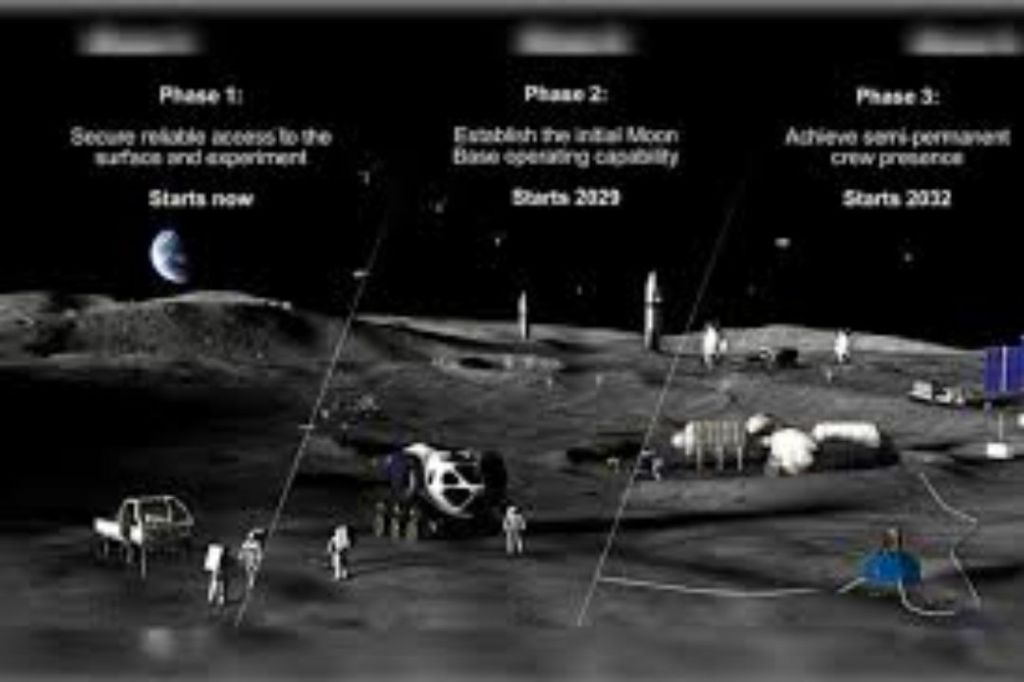
    Today, through the Artemis program, we are asking something far more difficult:


    Can we stay?

    This Is Where Things Get Complicated


    Going to the Moon once is a technical achievement.


    Building a sustained presence there is something else entirely.


    It requires:
    New systems
    New infrastructure
    New ways of thinking about risk, safety, and sustainability


    Even the tools we once used no longer exist in their original form.


    The Saturn V is gone.


    The supply chains are gone.


    Much of what we are doing now is not continuation.


    It is reconstruction—at a higher standard.

    Why the Moon—Again?


    If the goal is long-term exploration, why not go straight to Mars?


    Why return to a place we’ve already been?


    Because distance changes everything.


    The Moon is three days away.

    Mars is months.


    On the Moon, we can:
    Test systems
    Adapt quickly
    Learn from failure


    On Mars, we cannot.


    And so the Moon becomes something unexpected:


    Not the destination.
    But the proving ground.

    The Shift from Exploration to Infrastructure

    This is where the story changes.


    We are no longer planning missions.


    We are planning systems.

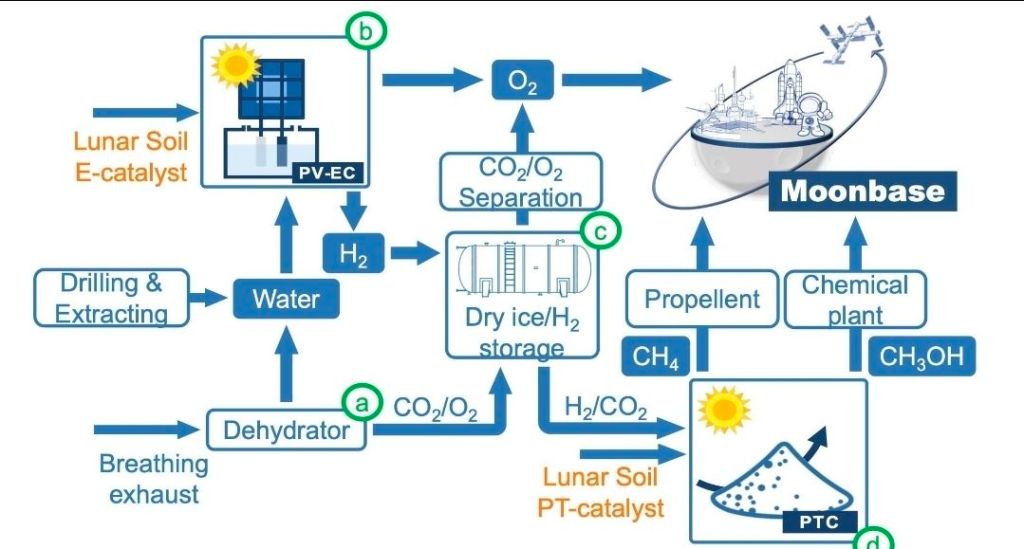
    At the Moon’s south pole, there is water ice—locked in shadow, preserved over time.


    That water can be transformed.


    Not just into something we use…
    But into something we build with.


    Fuel.
    Air.
    Sustainability.


    The Moon begins to look less like a place we visit…
    and more like a place we use to go further.

    The Gateway We Didn’t Expect


    If we can produce fuel on the Moon, something fundamental changes.


    Space travel no longer begins and ends on Earth.


    It becomes layered.


    Connected.


    Possible in ways it never was before.


    The Moon becomes:


    A refueling point
    A testing ground
    A foundation


    And in that role, it quietly becomes more important than Mars—at least for now.


    The Deeper Question


    This is where the surface-level question reveals something more.


    “Why has it taken so long to go back to the Moon?”


    Because we are no longer trying to go back.


    We are trying to go forward—differently.


    More deliberately.
    More sustainably.
    With a deeper understanding of what it actually means to leave Earth.


    A Final Thought


    We rushed to the Moon once—because we needed to prove that we could.


    We are returning now—because we need to understand what comes next.


    Not just how to arrive.
    But how to remain.


    And perhaps that is the real shift of our time:


    From capability…
    to responsibility.

  • Why I’m Choosing to Study AI at This Stage of My Life

    I could choose comfort right now.


    I have lived through enough seasons to justify slowing down. I have raised children. I am helping raise grandchildren. I have navigated adversity, health challenges, caregiving, and the kind of life experiences that reshape a person quietly over time.


    I have earned the right to rest.


    And yet, I find myself waking up early to study artificial intelligence.


    Not because I want to become a technologist.
    Not because I am chasing relevance.
    But because I believe we are living through a pivotal shift — and I don’t want to stand at the edge of it uninformed.


    Some mornings I am reading about machine learning models while helping my grandchildren find their shoes.


    It’s an odd pairing — future systems and spilled cereal.


    But maybe that’s exactly the point.


    The future is not abstract.
    It is unfolding in ordinary kitchens.


    AI is not just another wave of technology. It is an acceleration engine. It expands capability — in productivity, in healthcare, in education, in decision-making.


    Used well, it can enhance human capacity in extraordinary ways. It can reduce friction. It can assist learning. It can support complex analysis. It can help solve problems at scale.


    But tools amplify what already exists.


    If we are thoughtful, they scale thoughtfulness.
    If we are impatient, they scale impatience.
    If our systems contain bias, they can scale that too.


    That realization is what keeps me curious — and cautious.


    I am not interested in hype or fear. I am interested in stewardship.


    Artificial intelligence can process context and relationships between ideas at remarkable speed. But it does not carry conscience. It does not wrestle with moral tension. It does not absorb decades of lived experience and turn it into wisdom.


    Humans do.


    And that difference matters.


    I believe we have been given a conscience — an internal moral compass that can be strengthened or dulled by our choices. Self-awareness sharpens it. Empathy strengthens it. Contribution to something larger than oneself refines it.


    Ego erodes it.
    Narcissism erodes it.
    Power without reflection erodes it.


    Technology does not remove moral responsibility. It increases it.


    If we are going to build tools this powerful, then we must grow our moral maturity alongside our technical capability.


    This is why I am studying AI now.


    Not to compete with it.
    Not to fear it.
    But to understand it.


    To understand how it can expand human capability without eroding conscience.


    To model adaptability for the next generation.
    To remain intellectually alive.
    To participate responsibly in the world my grandchildren will inherit.


    We are no longer merely in the Age of Information.


    Information is abundant.
    Understanding is scarce.


    Understanding requires integration — of knowledge, experience, and moral clarity.


    AI can assist with knowledge.
    It cannot replace wisdom.


    That remains our responsibility.


    I choose curiosity over fear.
    I choose responsibility over passivity.
    And I choose to keep learning — because expansion is inevitable.


    Erosion is optional.

  • The Psychological State of Boredom

    What Bores Me

    By Betty-Jean

    We tend to think boredom means having nothing to do.


    But boredom isn’t about emptiness — it’s about disconnection.


    Psychologically, boredom is a state where the mind wants engagement but can’t find it. It’s a mismatch between attention and meaning. Your brain is alert enough to want stimulation, yet what’s in front of you doesn’t feel worthy of your energy. Restlessness sets in. Time stretches. You become aware of your dissatisfaction.


    Boredom isn’t laziness. It’s feedback.


    And what bores me?
    It changes.


    That’s the interesting part.


    Some days I’m bored by repetition — predictable conversations, surface-level thinking, tasks that feel mechanical. Other days, I crave simplicity and am bored by noise, complexity, and unnecessary urgency.


    Sometimes I’m bored by small talk.
    Other times, I’m bored by intensity.


    I can be bored in a crowded room and completely engaged in solitude. I can be bored by scrolling endlessly, yet captivated by a single deep idea.


    What bores me depends on:
    My energy
    My environment
    My emotional state
    Whether something feels meaningful or merely busy


    Boredom, for me, isn’t about activity level. It’s about alignment.


    If I’m misaligned with what I’m doing — if there’s no growth, no insight, no spark — I feel it quickly.


    But here’s what I’ve learned: boredom is rarely the enemy. It’s a signal.


    It tells me I’m ready for a shift. A deeper conversation. A new challenge. Or sometimes — just stillness without distraction.


    What bores me today may not bore me tomorrow.


    And maybe that’s the point.

  • Preventing Systemic Bias in the Age of Understanding


    By Betty Jean Budd


    We are living in what many call the Age of Information—but more accurately, it is the Age of Understanding.

    Information is abundant. Interpretation is powerful. And systems—educational, technological, economic, and governmental—shape how that information becomes knowledge, policy, and opportunity.


    With this power comes risk: systemic bias.


    Systemic bias is not just individual prejudice. It is bias embedded in structures, norms, data, algorithms, institutions, and decision-making processes. It operates quietly. It scales quickly. And in an AI-augmented world, it can replicate faster than ever before.


    The question is not whether bias exists.
    The question is: How do we prevent it from hardening into systems?


    1. Understanding What Systemic Bias Really Is
    Systemic bias occurs when policies, technologies, or institutional practices produce unequal outcomes—often unintentionally.


    It can appear in:
    ●Hiring and promotion systems
    ●Healthcare access and diagnostics
    ●Criminal justice risk assessments
    ●Educational streaming
    ●Financial lending models
    ●AI-driven decision tools


    In the digital age, bias often enters through data. If historical data reflects inequality, and that data trains modern systems, the future becomes a polished version of the past.
    The philosopher John Rawls argued that justice requires fairness in the basic structure of society. Today, “basic structure” includes algorithms and AI models. Justice must therefore evolve to include technological fairness.


    2. Why Bias Accelerates in the Age of AI
    Artificial intelligence does not create bias from nothing. It reflects patterns it is given.
    OpenAI and other AI research organizations emphasize that AI models learn from large-scale datasets drawn from human-created content. If those datasets include stereotypes, underrepresentation, or structural inequities, models can mirror them.
    The philosopher Hannah Arendt warned of the “banality of evil”—harm that arises not from malice but from unexamined systems. In AI systems, harm can emerge not from intent, but from automation without reflection.
    Speed + scale + automation = amplified bias.
    Prevention must therefore be proactive, not reactive.


    3. Five Pillars for Preventing Systemic Bias
    1️⃣ Diverse Design Teams
    Bias prevention begins before deployment. Systems designed by homogenous groups risk blind spots. Including diverse perspectives—across age, gender, culture, ability, socioeconomic background—reduces unseen assumptions.
    Diversity is not political correctness.
    It is epistemic strength.


    2️⃣ Transparent Data Practices
    Organizations must ask:
    Where did the data come from?
    Who is underrepresented?
    What historical inequities are embedded?
    Transparency builds accountability. Hidden data pipelines create hidden inequities.

    3️⃣ Ethical Framework Integration
    We must integrate moral philosophy into technology design.
    Rawls: Would this system be fair behind a “veil of ignorance”?
    Kant: Are we treating individuals as ends, not merely as data points?
    Utilitarianism: Who benefits? Who bears the risk?
    Ethics cannot be an afterthought. It must be architectural.


    4️⃣ Continuous Auditing
    Bias is dynamic. Social norms change. Language evolves. Economic conditions shift.
    AI systems require:
    Ongoing bias testing
    Independent audits
    Public reporting mechanisms
    Prevention is not a one-time certification. It is maintenance.


    5️⃣ Human-in-the-Loop Governance
    Automation should support judgment, not replace it.
    Critical decisions—employment, medical triage, sentencing, benefits eligibility—require meaningful human oversight. Humans must retain the authority to question algorithmic outputs.
    Understanding is relational. Systems must reflect that.


    4. Education as the Long-Term Solution
    Ultimately, preventing systemic bias is not only technical. It is educational.
    We must cultivate:
    Critical thinking
    Statistical literacy
    Bias awareness
    Ethical reasoning
    AI fluency
    When citizens understand how systems work, they can hold them accountable.
    The Age of Understanding requires meta-understanding:
    Understanding how understanding itself is shaped.


    5. From Reactive Correction to Proactive Design
    Historically, societies addressed bias after harm occurred—after lawsuits, protests, or policy failures.
    In the AI era, reactive correction is insufficient.
    We must shift from:
    Fixing outcomes → Designing fair inputs
    Responding to complaints → Anticipating inequities
    Compliance mindset → Justice mindset
    Systemic bias thrives in invisibility.
    Prevention thrives in intentionality.


    6. A New Civic Responsibility
    In previous generations, civic literacy meant understanding law and governance. Today, it includes understanding data systems and algorithmic decision-making.
    Every leader—whether in employment services, healthcare, education, or business—must ask:
    What assumptions shape our system?
    Who might be disadvantaged?
    What feedback loops reinforce inequality?
    How do we measure fairness?
    Bias prevention is not anti-technology.
    It is pro-human.


    Conclusion: Designing the Future with Integrity
    The Age of Understanding presents a paradox:
    We have more tools than ever to reduce inequality—and more tools than ever to encode it permanently.
    Preventing systemic bias requires humility, transparency, interdisciplinary collaboration, and ethical courage.
    Technology is not destiny.
    Systems are designed.
    And what is designed can be redesigned.


    In the end, preventing systemic bias is not about eliminating human imperfection. It is about building structures that recognize it—and correct for it.
    The future will not be shaped merely by intelligence.
    It will be shaped by wisdom.